Platform Service for Volunteer Engagement
in Social Ventures in India
Role: Service Designer and Researcher
Duration: 6 Months
Summmary
In this project, I designed a service platform for volunteer engagement that supports the entire volunteering journey, from discovery and matching to onboarding, training, active participation, exit, and post-volunteering engagement. I adopted a service design and value co-creation approach, supported by a review of relevant literature, an analysis of 18 existing volunteer platforms, a survey with volunteers, and interviews with representatives from social organisations. Based on these insights, I defined design strategies and mapped an ideal volunteer lifecycle. I then developed detailed journey maps, service blueprints, personas and scenarios, and designed key platform touchpoints. I also identified potential service failure points and addressed them within the proposed service model. The platform was iteratively refined through expert evaluation and continuous feedback, which informed both the final design and the project outcomes.
Outcome Highlights
End-to-end service design covering the entire volunteer lifecycle, validated by 100% of experts as useful and holistic.
Informed by 18 platform analyses, a volunteer survey and interviews with social organisations.
Complete service system including journey maps, service blueprints, personas and touchpoint designs, covering multiple volunteer and organisational scenarios.
Evaluated through a two-round expert review and user review, with 71% of experts expressing interest in supporting real-world development.
About the Project
Volunteering involves unpaid work motivated by factors such as skill development and personal growth, but volunteers differ in their preferences, availability, skills, and the types of volunteering they wish to undertake. At the same time, social organisations have specific needs and limited resources, and poorly matched or short-term volunteers can reduce both organisational effectiveness and volunteer satisfaction. As both volunteers and organisations face distinct motivations and constraints, finding an appropriate match is essential. A service design approach, which considers the volunteering journey holistically and over time, can help create more meaningful and sustainable volunteering experiences for both parties.

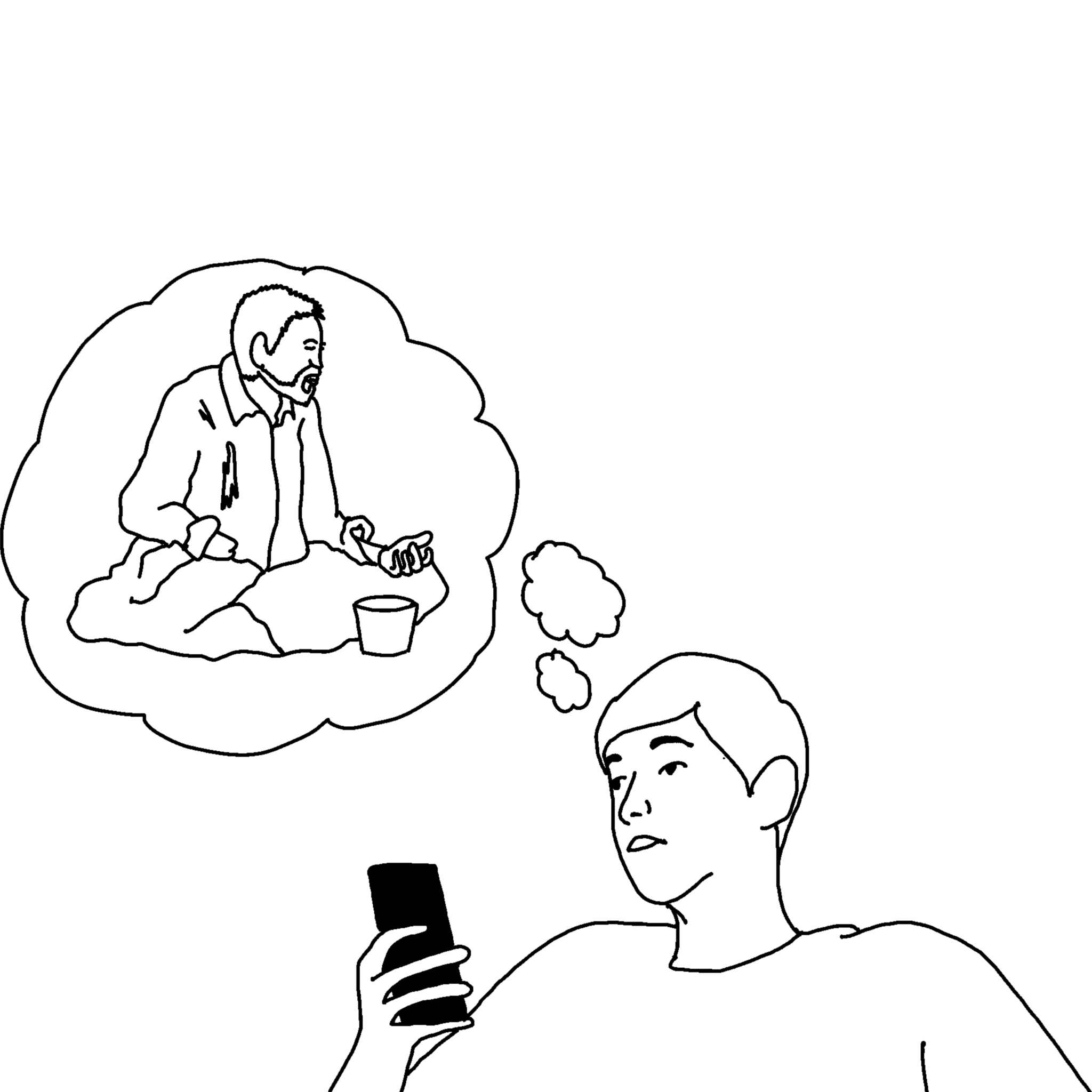
One common scene that he sees outside the train station is extremely poor homeless people, and sometimes even physically challenged people, begging. He once tried to give some spare change he had, but realised that giving 1 or 2 rupees might not be the best way to help them.
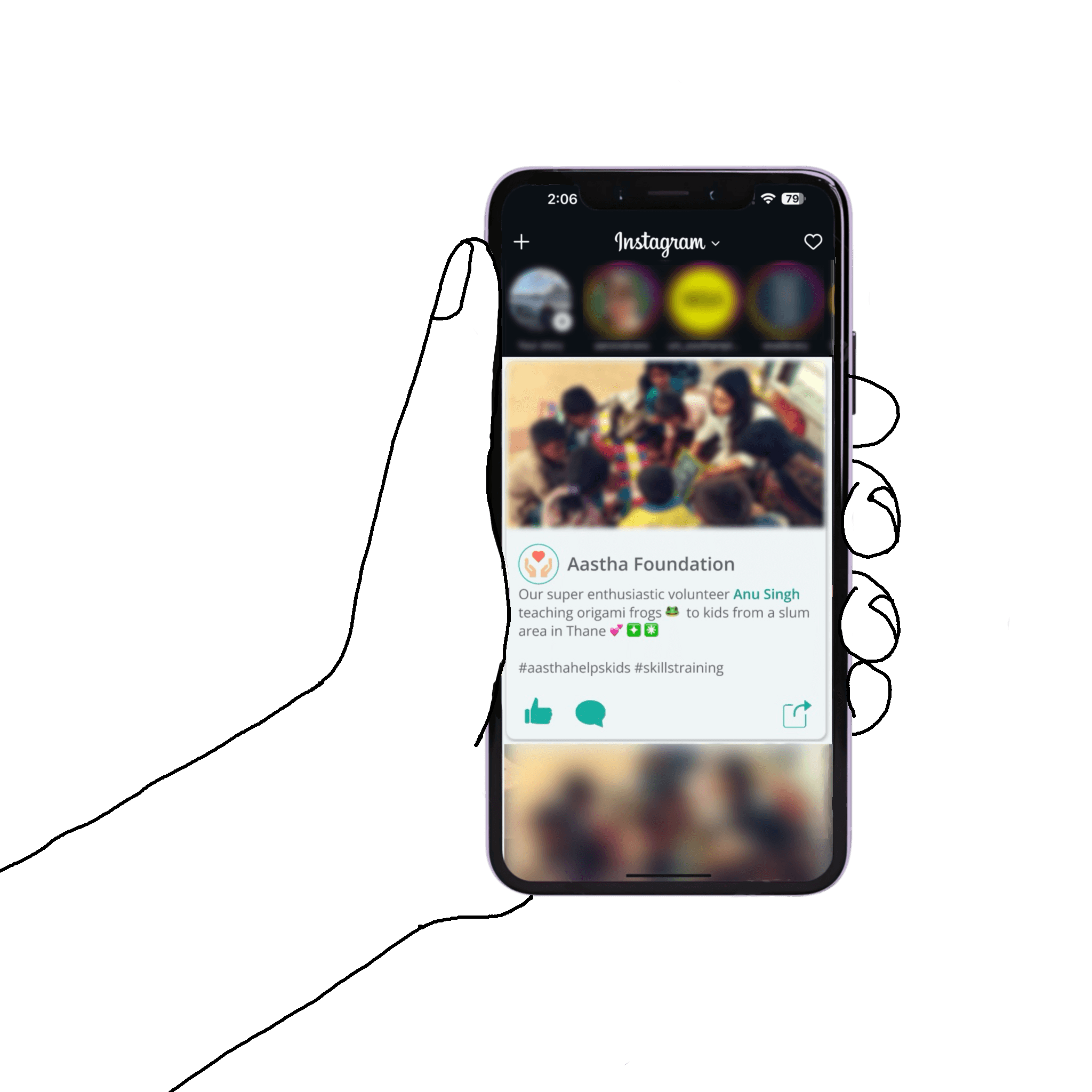
Until one day, he saw a post by his friend Anu on Instagram, where she was seen interacting with some homeless kids.
Shubham saw that post and was instantly reminded of his own experience at the train station.
He replied to that post and asked more about it. Anu told him that she was working with an organisation called Aastha foundation, which worked in the domain of rehabilitation of the homeless. Shubham asked a few more questions, and Anu sent him an introductory message with a few videos of the Aastha foundation
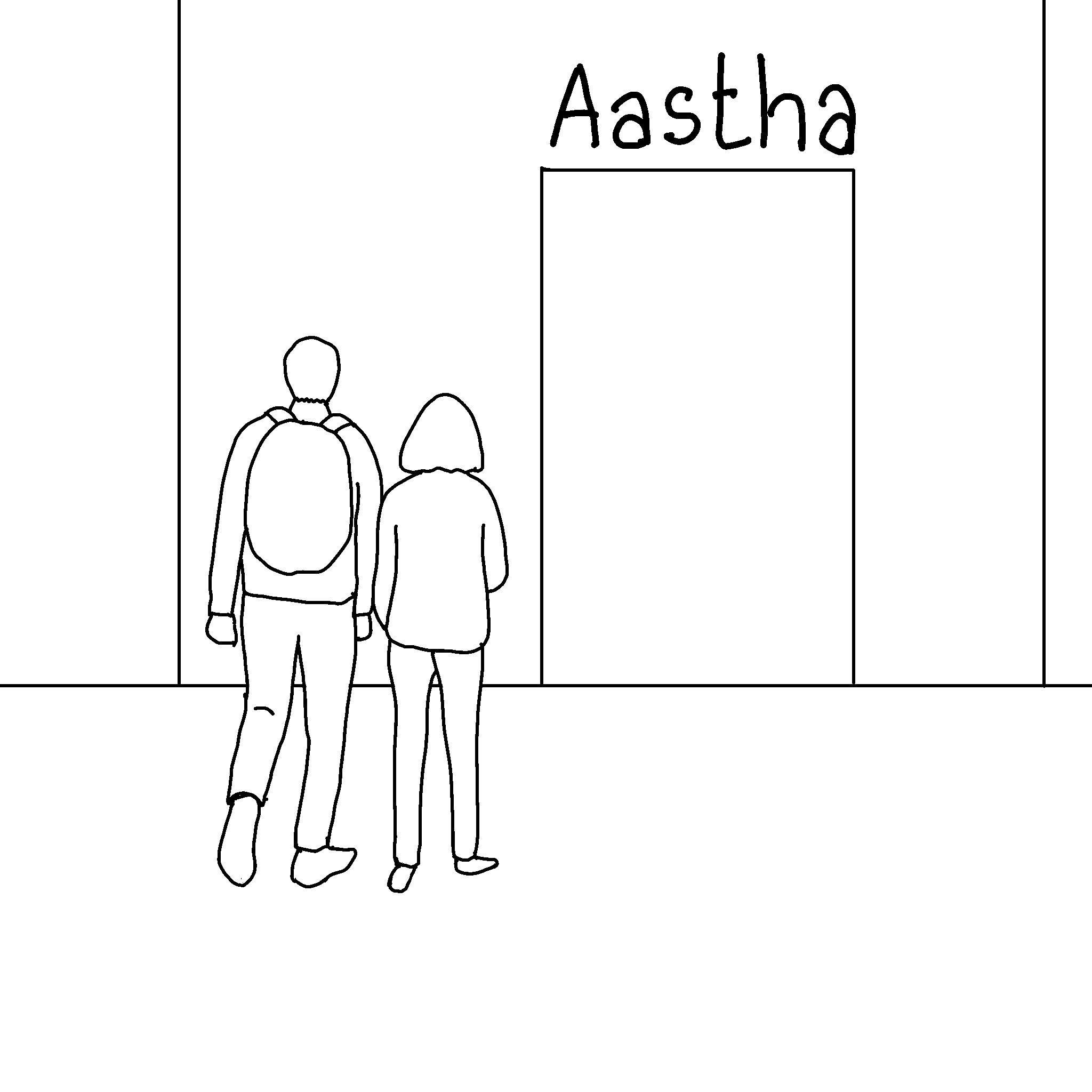
After Shubham expressed interest in the organisation's work, Anu invited him to visit Aastha with her.

At Aastha, he met with Anu's teammates and saw some pictures and videos of their earlier events and campaigns. The team suggested that Shubham check out this app called Vayam for volunteering opportunities of his interest. Thus started Shubham‘s journey of volunteering.
Explore
After installing the app, Vayam prompts Shubham to select at least one domain of interest.
Each domain includes a brief description outlining the volunteer’s role, and based on his initial selection, Vayam suggests related domains to expand his options.
In this case, Shubham shows interest in Assisting the Disabled, prompting Vayam to recommend Community Welfare as a related area.
A deliberate decision was made to avoid collecting extensive information at the outset, allowing volunteers to explore freely. These domain preferences remain flexible and can be updated at any stage.
Study of Current Practices and Existing Platforms
Volunteer Survey and Organization Interviews
Ideation and Prototyping
End-to-End Service Blueprinting
2-round expert evaluation and user review
Methodology
Problem Space
Customer Lifetime Trajectory
Customer Journey Map
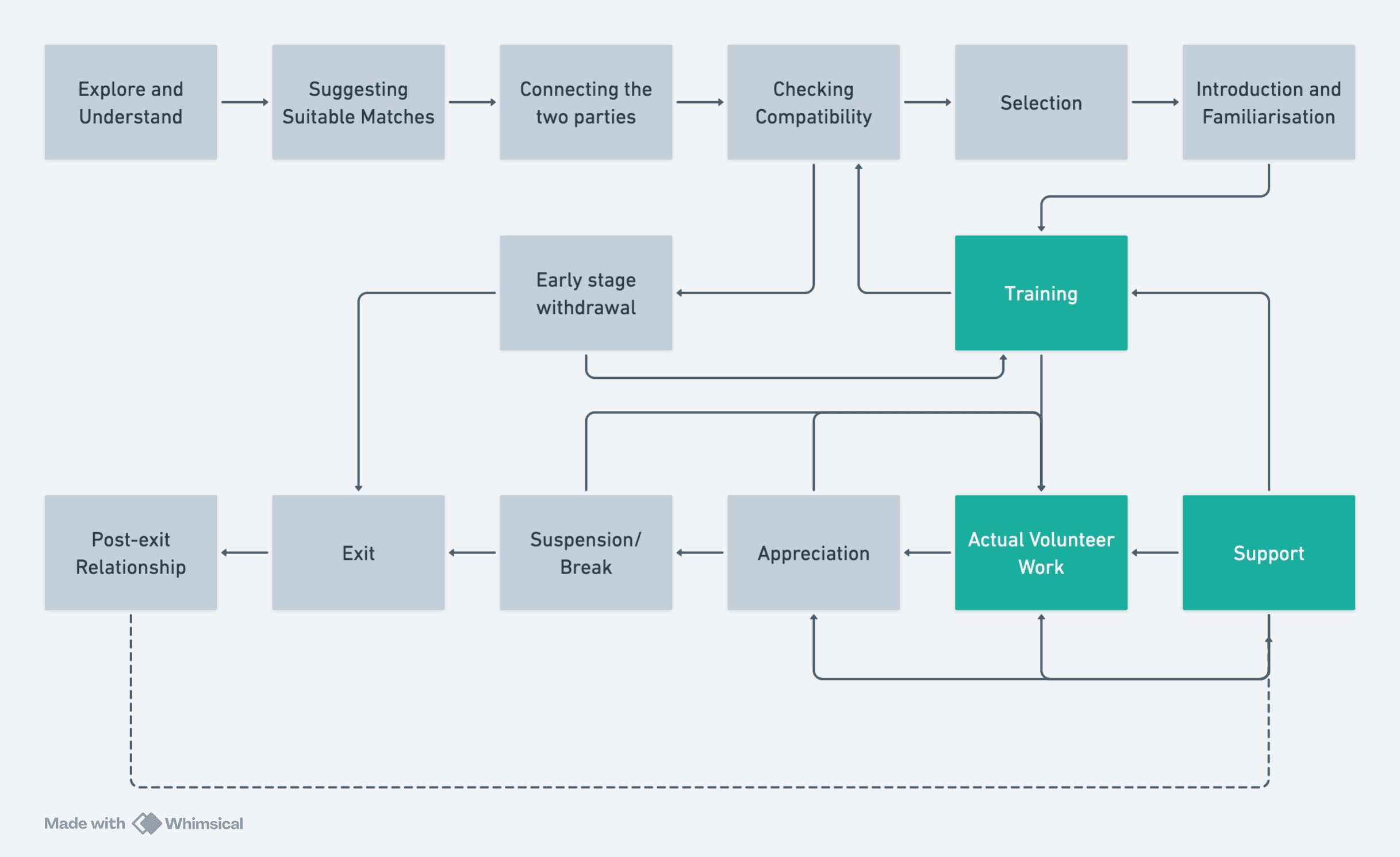
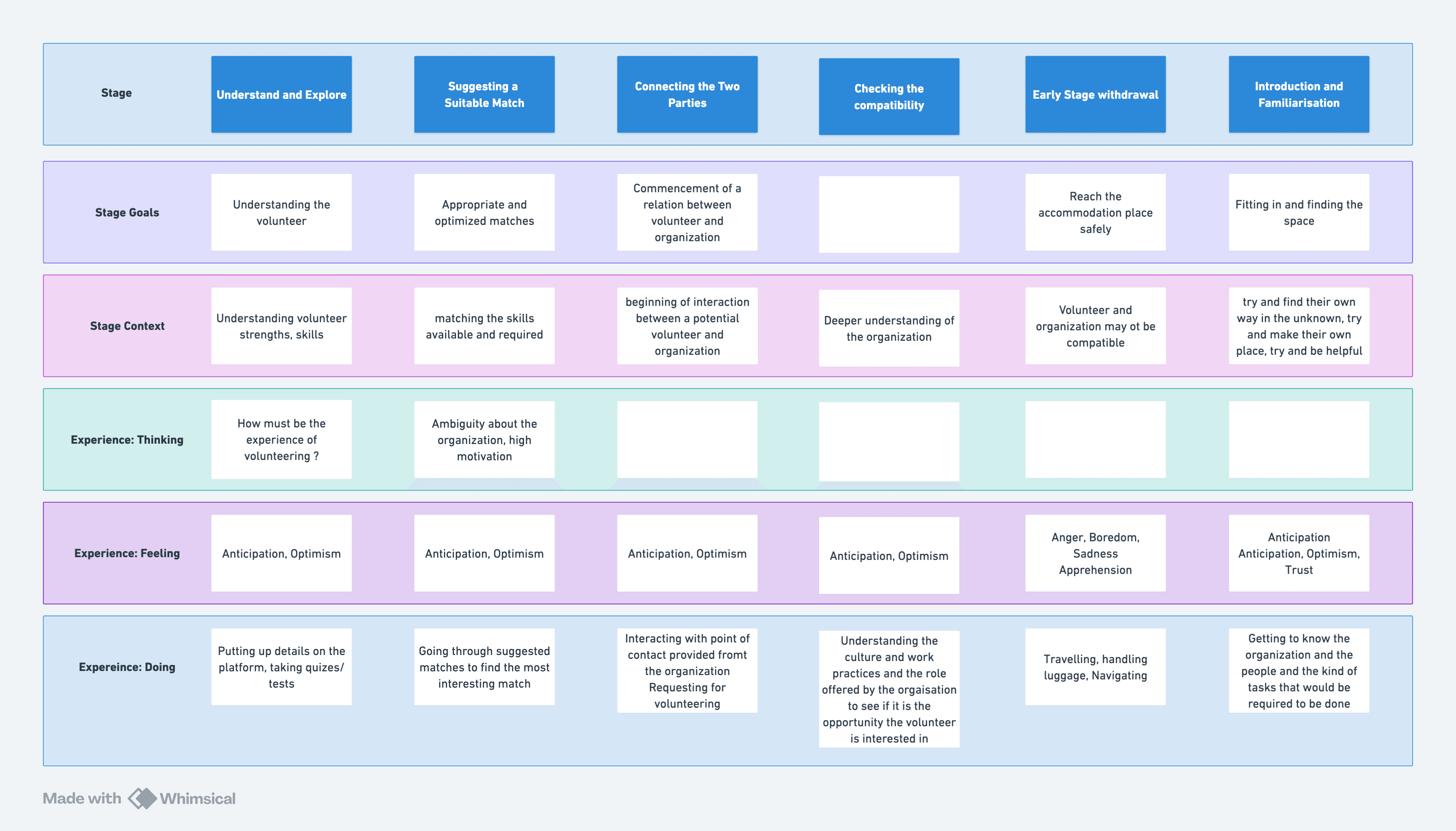
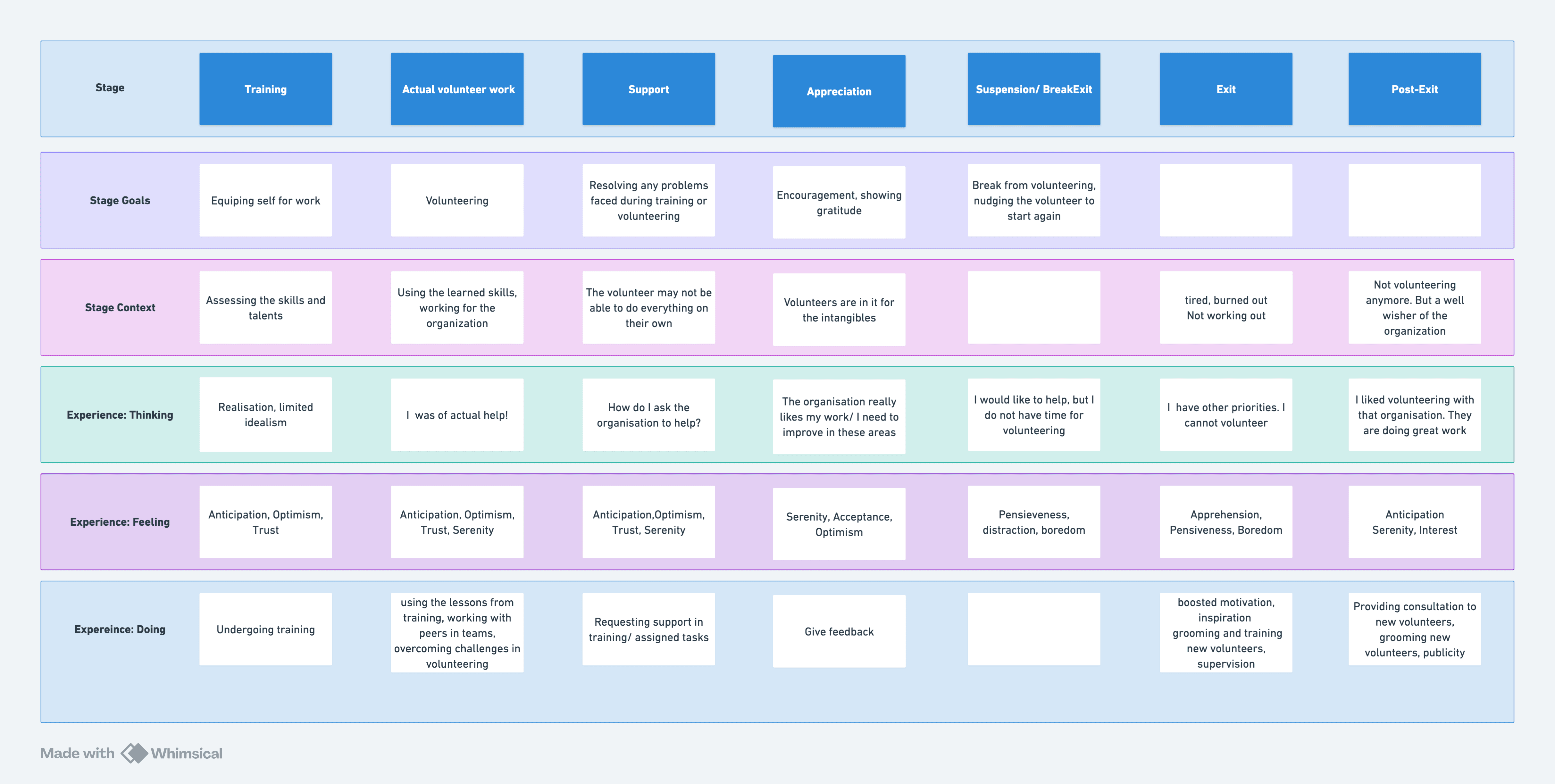
The customer lifetime trajectory maps volunteer intentions, goals, context, thoughts, feelings, and actions at each stage. Volunteer engagement involves: matching and connecting volunteers with organizations, checking compatibility, selection, introduction and familiarization, training, actual volunteering, exit, ongoing support, and post-exit engagement.
Forming a close-knit community of dedicated volunteers and social organisations,
Allowing volunteers to engage with peers and explore all aspects of volunteering,
Making the process of engaging with and managing volunteers accessible and easy for the organisations,
Making support accessible to volunteers during their journey, as well as to organisations, through useful resources.
Most platforms focus on matching volunteers with organizations and sharing general information, resources, and success stories.
They often lack structured role clarity and task-specific guidance for volunteers.
Systematic feedback and ongoing engagement beyond initial connection are limited.
Tools like dashboards, newsletters, and events exist but don’t fully support learning, impact visibility, or the volunteer lifecycle.
There is an opportunity for a holistic, skill- and outcome-oriented platform.
Volunteers are motivated by learning, skills, and altruism.
Most engage multiple times in public-good sectors.
Discovery is informal; role clarity and onboarding are often lacking.
Drop-off occurs due to time constraints and low perceived impact.
Post-volunteering engagement is limited, highlighting the need for a full-lifecycle, skill-focused platform.
Recruitment is mostly informal, via word-of-mouth.
Short-term training is provided for core volunteering activities.
Volunteers prefer mission-aligned tasks; support (travel, materials) varies.
Challenges include high drop-off after orientation and low engagement with training.
Organizations expect volunteers to be regular, committed, and sincere.
Platform Objectives
This is Shubham, a third-year architecture student who has to travel in the local train to get to his college every day, and while doing that, he often sees all kinds of people from various walks of life.

The final solution is presented through the journey of Shubham, one of the primary personas representing the target audience. Through his story, the platform's experience is illustrated step by step - from discovering the app, to onboarding, exploring volunteering opportunities, and actively participating in initiatives.
Shubham
21-year-old, socially conscious and tech-savvy architecture student from Navi Mumbai.
Interested in environmental and social impact but lacks volunteering experience.
Feels frustrated seeing social issues during daily travel and not knowing how to help effectively.
Financial and mobility constraints limit his ability to contribute.
Discovers a disability NGO through a friend’s Instagram post and is motivated to volunteer with peer support.
Personas
Ramya
40-year-old, ambitious and tech-savvy IT manager from Pune, living with her husband and daughter.
Strongly values gender equality and actively mentors junior women at her workplace.
Shares experiences through blogs and social media, focusing on women empowerment.
Invited by a friend to support a rural development NGO as a speaker and mentor.
Despite time constraints due to work and family, she contributes as an honorary expert and content mentor through the Vayam platform.

Chandrakant
58-year-old kind, curious and knowledgeable doctor running a home clinic in Goregaon, Mumbai.
Lives with his wife; children are settled elsewhere, giving him time and space to contribute.
Owns a front yard and is interested in using it for social and community causes.
Gets introduced to volunteering through a friend’s NGO working with mentally challenged children.
Decides to offer his space to NGOs and sustainable organisations using the Vayam platform, despite minor age-related constraints.

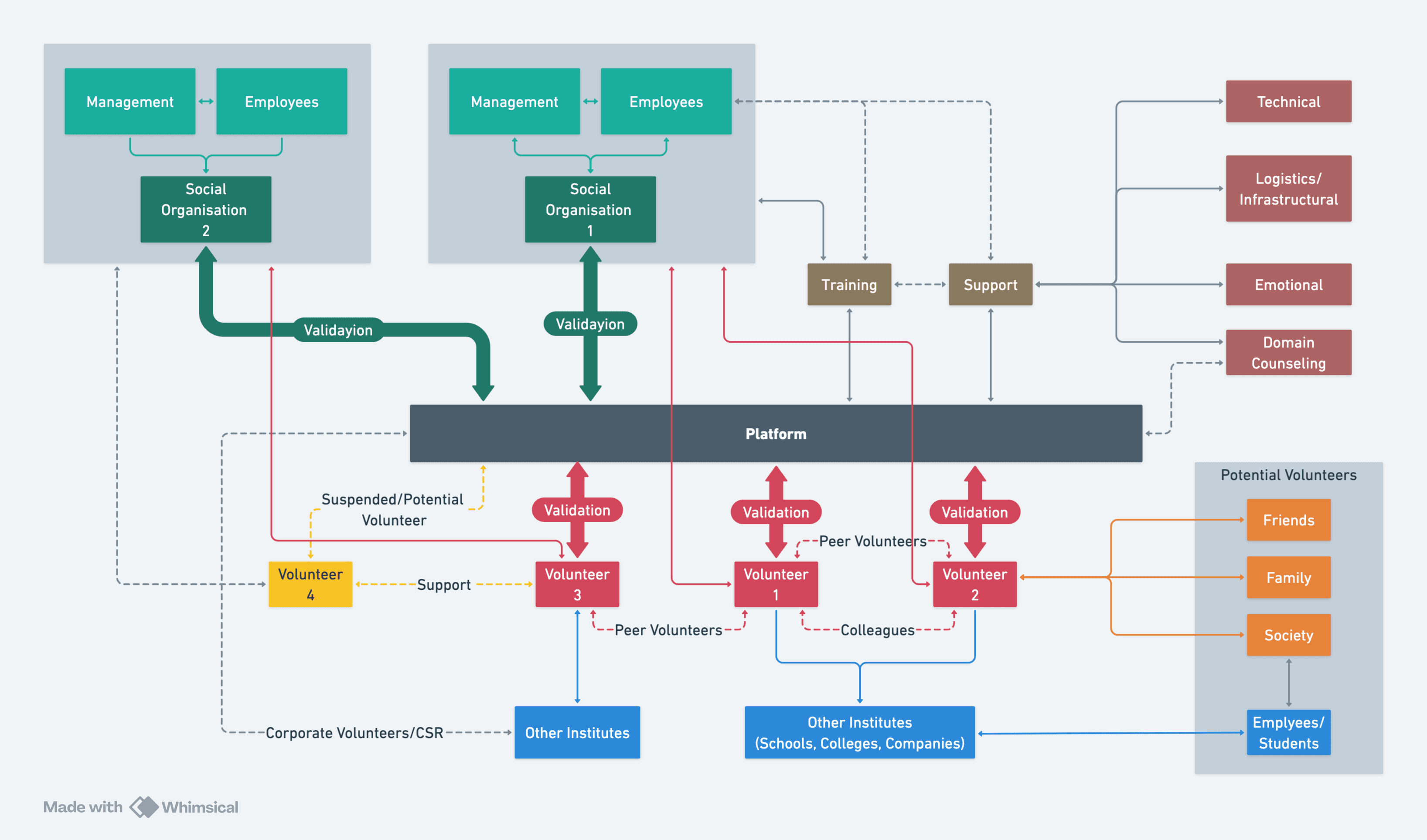
Service Ecosystem
Service Encounter Blueprint
The Service Encounter blueprint can be found here
Prototype and Final Solution
Vayam (वयम्, pronounced vuh-yum) - the Sanskrit word for “we” - embodies the idea of collective effort and shared responsibility. The platform brings together individuals who wish to contribute to meaningful causes, creating a community of volunteers working collaboratively to generate positive social impact.
Explore and Understand
Upon entering the platform, Shubham sees posts from organisations showcasing their recent activities.
He comes across Anu’s profile and connects with her, while Vayam suggests a few organisations to get started.
However, Shubham takes time to explore independently, browsing through organisations’ work via images, newsletters, blogs, and videos integrated into the platform.
Understand and Suggest
As part of the designed user experience, the platform also nudges Shubham to create a profile for more effective matching.
He is prompted to fill in key details such as personal information, education, location preferences for volunteering, strengths and interstes
While he continues exploring his status is 'Exploring' by default. Completing his profile allows him to switch his status to “actively looking.”
At this stage, he begins receiving requests from a few organisations. However, after reviewing his options, Shubham chooses to join Aastha, as he resonates with the work they do.
You can find the detailed project report here
You can find the presentation video here
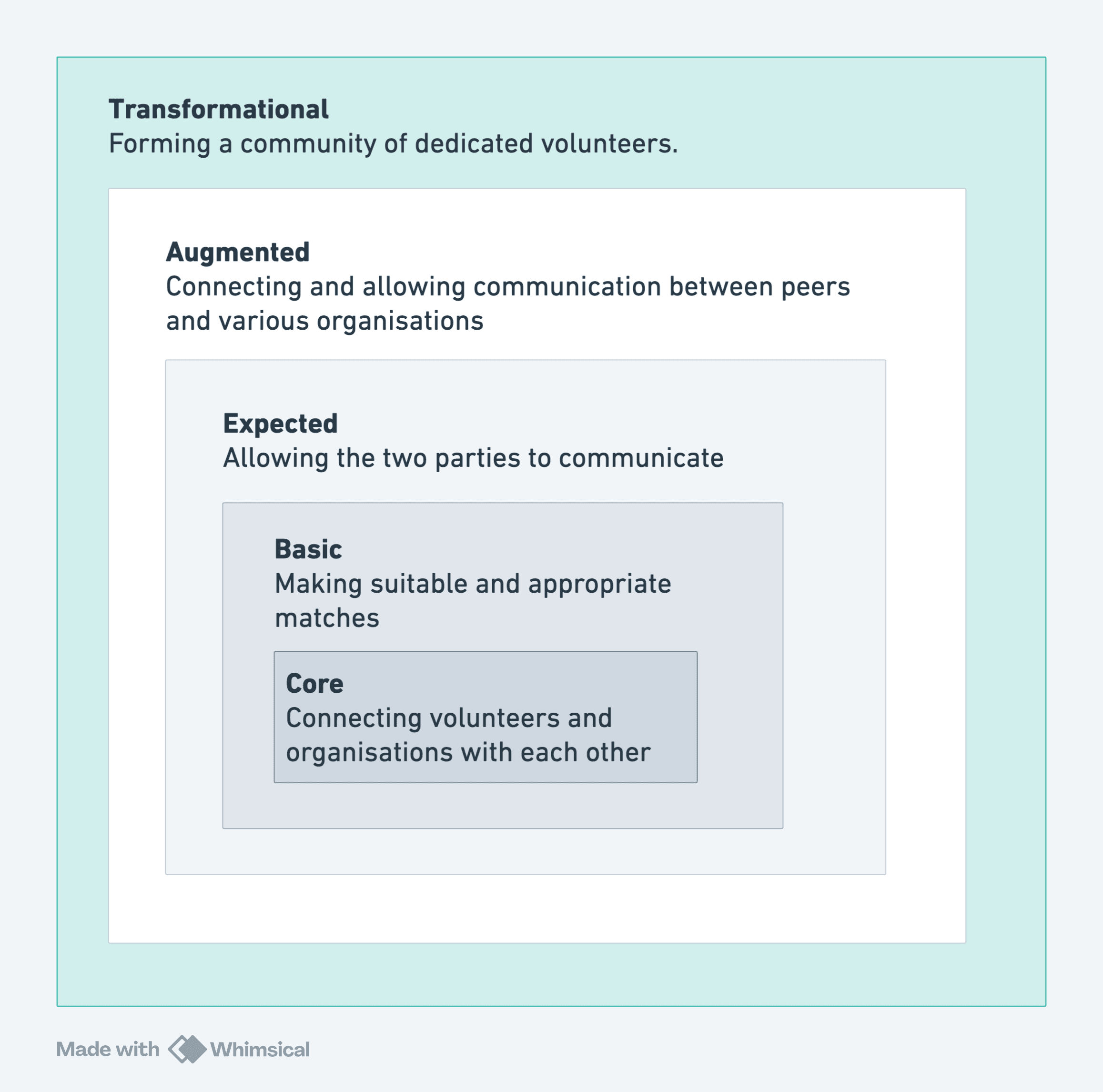
The platform is designed not only to connect and engage volunteers with organisations but also to foster a close-knit community of committed individuals and social groups. While most existing platforms focus primarily on making suitable matches—a basic form of value creation—this platform seeks to redefine volunteer engagement by offering deeper, more meaningful experiences.
Using Kotler’s Five Product Levels, it can be understood as a progression from fulfilling a basic functional need to providing a highly differentiated and enriched service that delivers enhanced value, emotional engagement, and a sense of community for volunteers and organisations alike.
Levels of service value creation:
Areas for Improvement
Enable volunteering with multiple organisations simultaneously.
Introduce role-based hierarchy to manage access and visibility.
Develop a more robust feedback system with controlled visibility.
Use multi-parameter volunteer ratings (e.g., consistency, productivity), while managing complexity.
Strengthen data security and privacy guidelines for platform usage.
Positive Feedback
The platform effectively supports the end-to-end volunteering journey.
Strong value co-creation for both volunteers and organisations.
Considered usable in its current form, with scope for feature expansion.
Largely replicates offline organisational workflows digitally.
High interest in real-world implementation, with some experts offering support.
Feedback from Potential Users
Generated strong interest in volunteering and platform adoption.
Key highlights: personalised recommendations, ability to explore domains, and a dedicated space for social impact engagement.
User Testing & Feedback
Resources
Aastha also has access to a shared repository of resources, including training materials such as short videos, notes from past activities, and workshop content.
These resources can be reused and shared across organisations on the platform.
They may also include practical assets like publicity video guides or templates for introducing the organisation to potential volunteers, similar to what Anu used to introduce Shubham to the Aastha Foundation.
Volunteer Management
Mentors at Aastha can engage with volunteers both individually and in groups.
They have a unified view of all participants, including applicants, active volunteers, and alumni.
This allows them to manage tasks, assign training, and oversee engagement from a single interface.
Inspiring Across the Platform
From the organisation’s perspective, the platform functions in a similar way.
Aastha has its own page where it shares updates about its activities, tags volunteers, and recognises their contributions.
Vayam also recommends potential volunteers who may be interested in Aastha’s work, enabling the organisation to proactively reach out and invite them to join.
On the side of the organisation
Actual Volunteer Work, Trainings and Suppport
Shubham can now access a dedicated portal to view assigned tasks and any recommended training from Aastha.
He can track ongoing and completed tasks, access detailed task information, see other participants involved, and request support when needed.
The platform also notifies him of new task requests from the organisation, which he can accept or decline based on his availability and existing commitments.
Although these stages take place offline, the platform plays a supportive role by providing relevant resources, guidance, and structured information. It helps coordinate interactions, sets clear expectations, and ensures that both the volunteer and the organisation are better prepared for each step, enabling a smoother and more informed onboarding experience.
Shubham decides to volunteer with Aastha and reaches out to Anu through the platform to express his interest. Anu responds by inviting him to visit the organisation and explore the opportunity further.
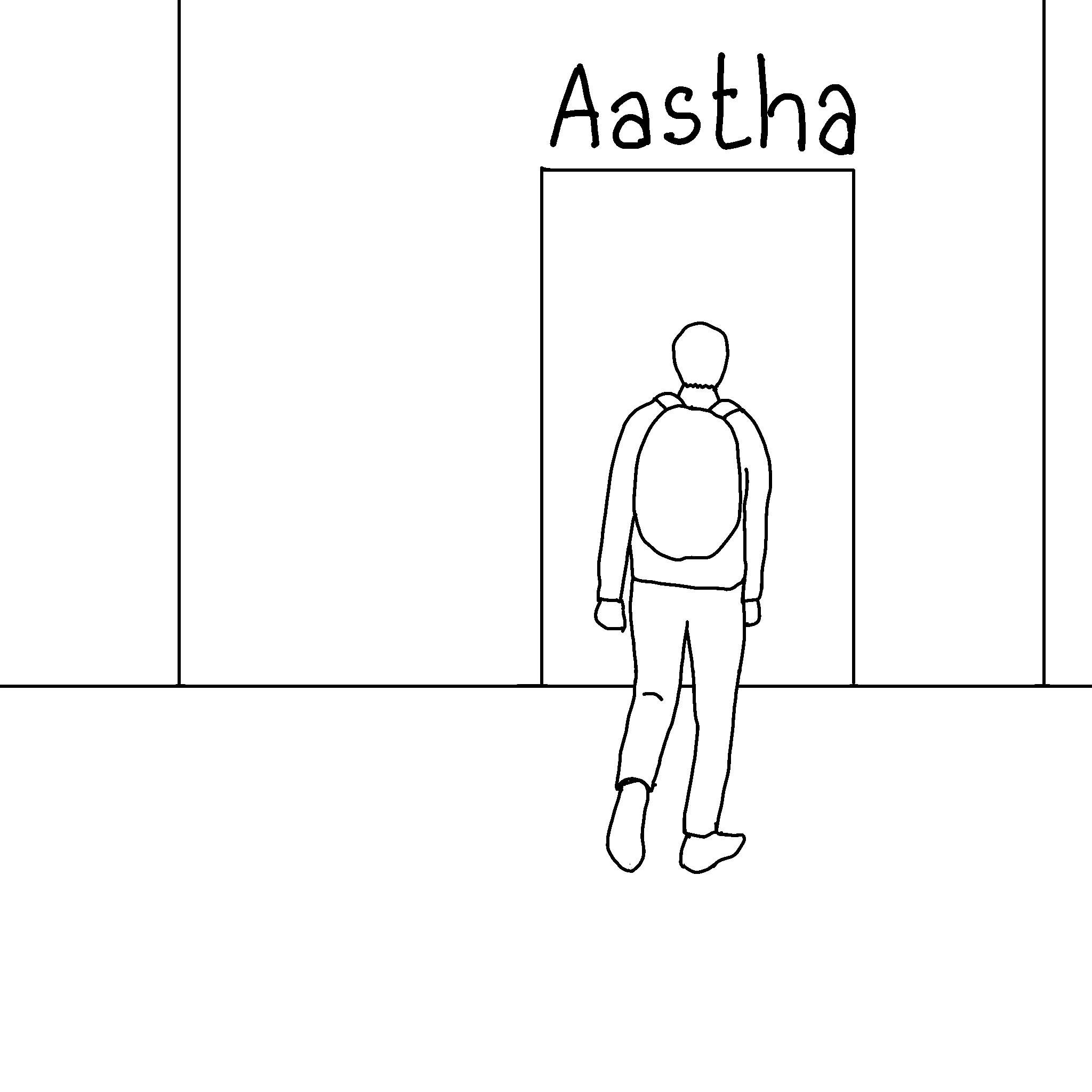
Shubham visits the Aastha office, where Anu and her team welcome him and introduce him to the organisation’s mission, ongoing projects, and impact.
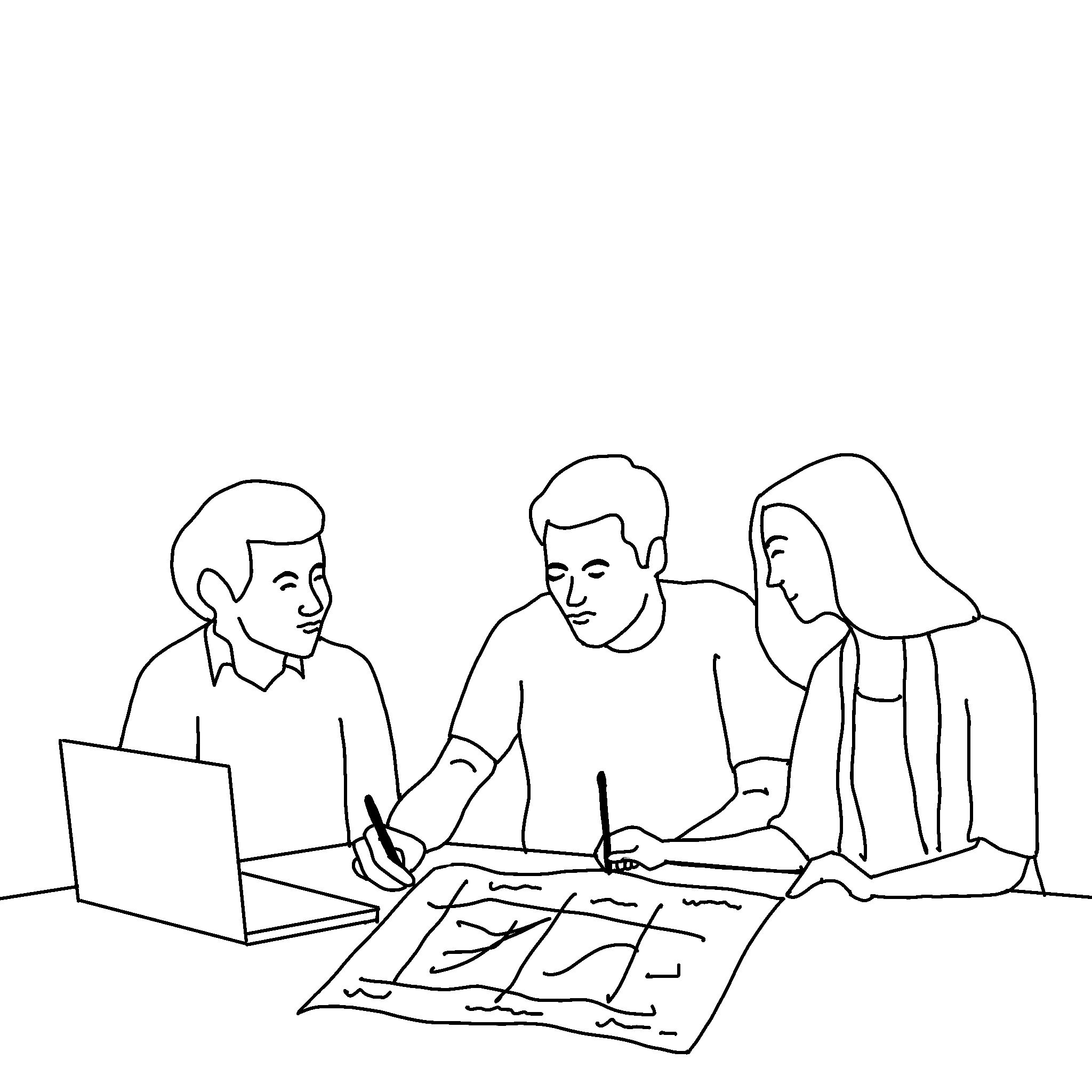
With support from Anu and her team, Shubham identifies volunteering roles that align with his skills, interests, and availability.