Designing Inclusive Higher Education
in UK Universities: Theory to Practice
Role: Service Designer and Researcher
Duration: 3 Months
About the Project
The project "Designing Inclusive Higher Education: A Holistic Approach from Theory to Practice" investigates how to integrate inclusive education into higher education institutions. Inclusive education is vital for equitable access to high-quality education, ensuring all students, regardless of ability, benefit from it. It supports long-term social inclusion, enhances learning outcomes, and drives systemic changes, teacher development, and stakeholder collaboration.
Project Aim and Objectives
Aim
Identify key principles and best practices for designing inclusive higher education environments.
Objectives
Identify core principles of inclusive learning environments
Analyse inclusivity practices across universities
Synthesise findings into design-led recommendations
Create an inclusive student journey map
Secondary research and literature review
Comparative analysis of institutional inclusivity practices
Thematic analysis of public EDI and inclusivity content
Synthesis into a service design artefact (student journey map)
Methodology
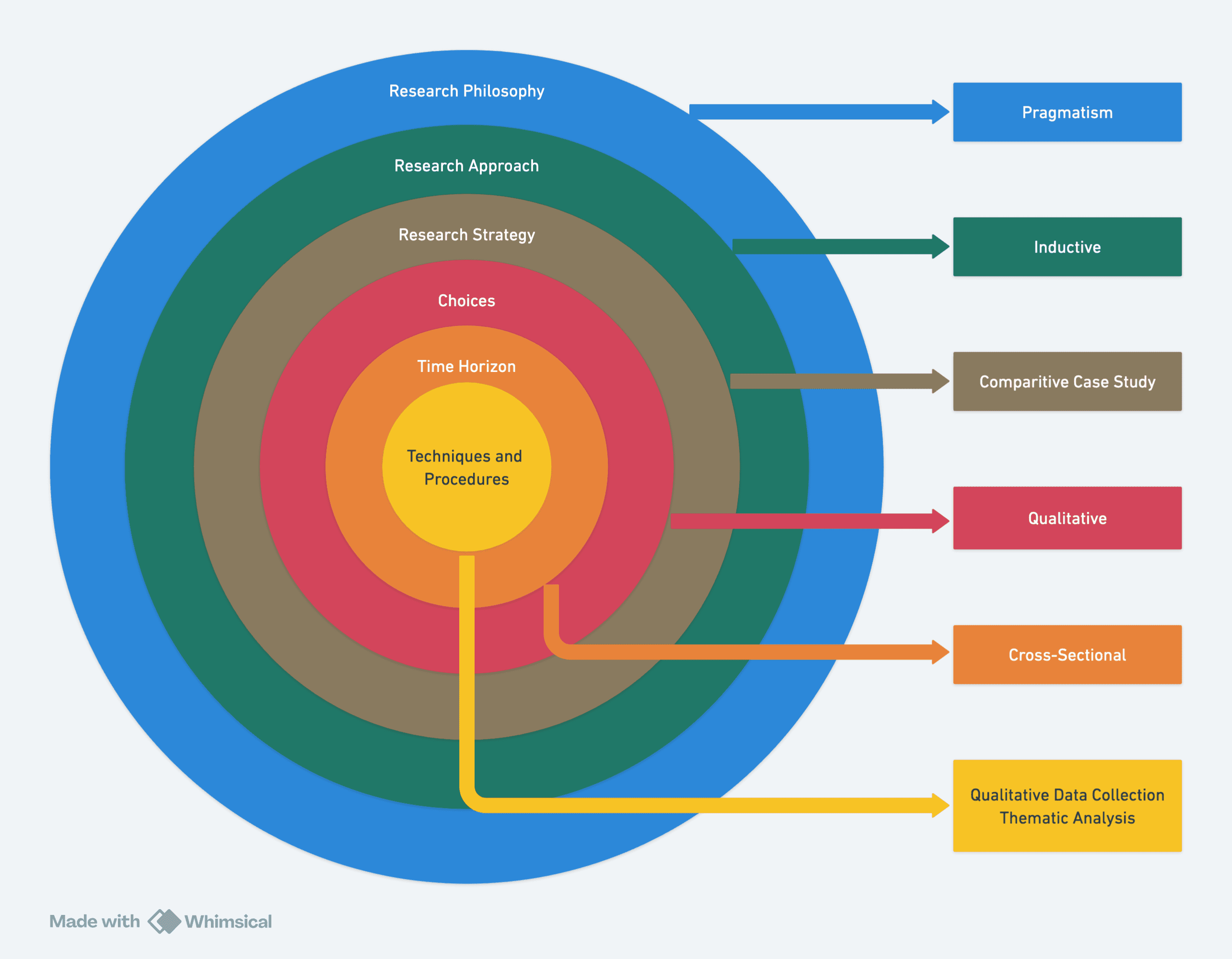
The project followed a structured research methodology using the Research Onion framework, adopting a pragmatic philosophy and an inductive, qualitative approach. A comparative case study of two UK university inclusivity webpages was conducted at a cross-sectional time horizon (specific point in time). Inclusivity-related content (text, images and media) was collected and analysed through thematic analysis to identify recurring patterns, values and gaps in how inclusion is communicated. The findings were then synthesised into an inclusive student journey map, proposing practical, stage-by-stage improvements across the student lifecycle to support more inclusive higher-education experiences.
Thematic Analysis
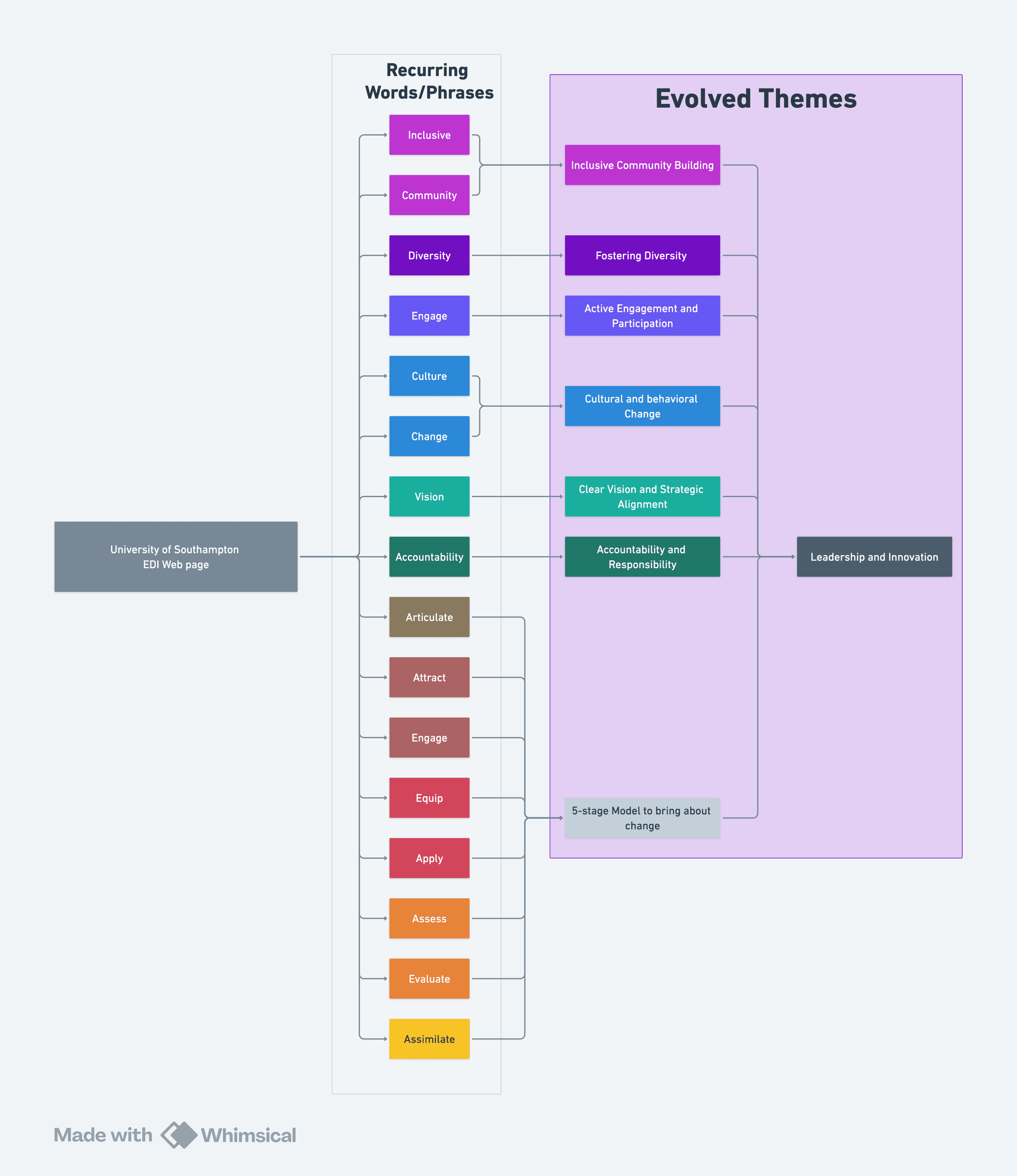
This project examines how the University of Southampton and Imperial College London address Equality, Diversity, and Inclusion (EDI) on their websites, comparing their approaches to understand both shared goals and distinct strategies for fostering inclusive academic environments.
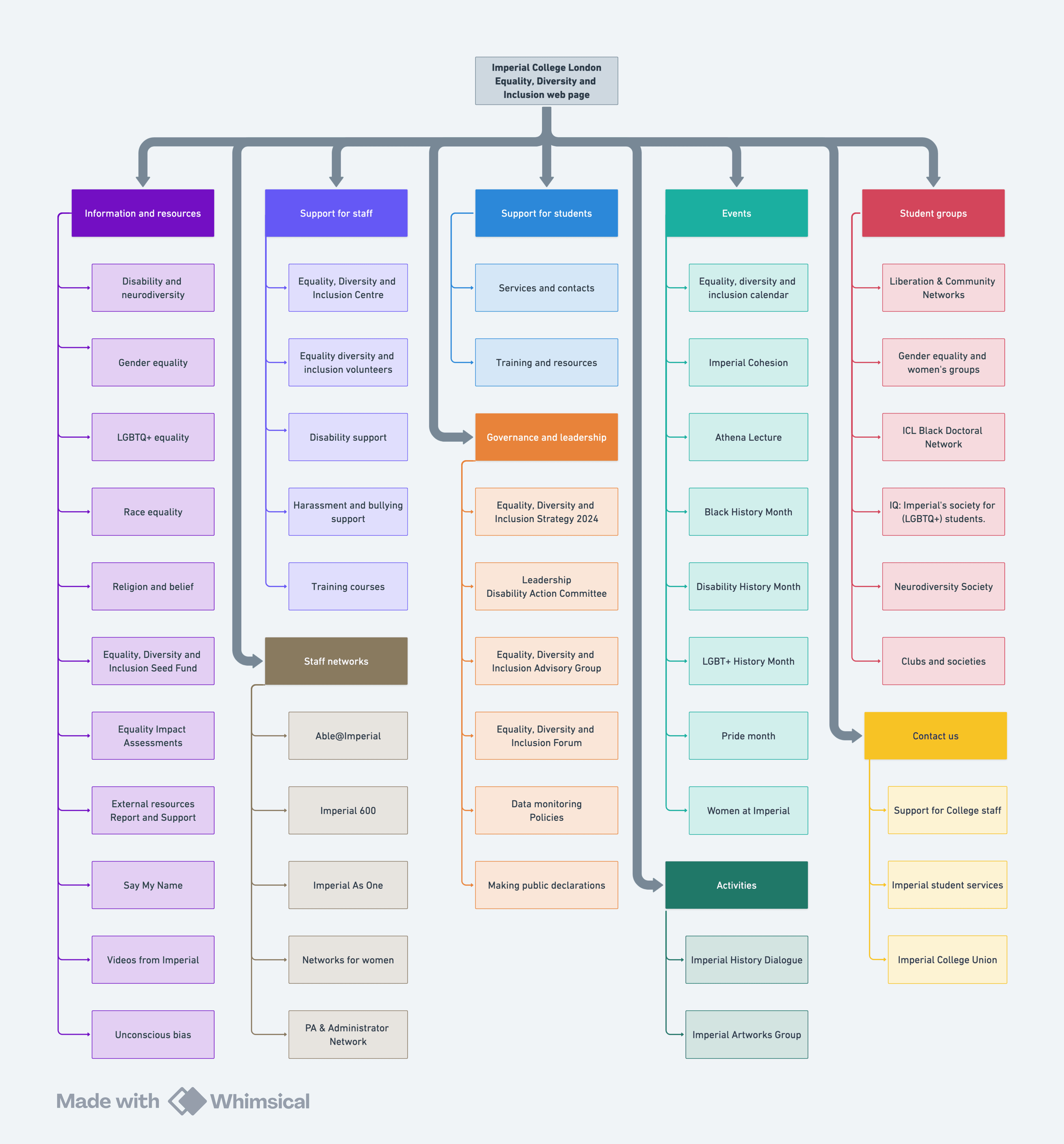
Summmary
This project explored how inclusive design principles can move from institutional policy to real student experiences in higher education. Using secondary research and thematic analysis of Equality, Diversity and Inclusion content from University of Southampton and Imperial College London, I identified key patterns, gaps and variations in how inclusivity is communicated and implemented. These insights were synthesised into a multi-stage inclusive student journey map with an emotional layer to highlight critical transition points, and translated into practical, design-led recommendations for improving services, communication and engagement.
Outcome Highlights
Designed a 7-stage inclusive student journey map covering the full student lifecycle.
Synthesised 5 higher-education journey frameworks into one consolidated model.
Produced 9 actionable, design-led recommendations for improving inclusive services and communication.
Both the University of Southampton and Imperial College London share several common priorities in their Equality, Diversity, and Inclusion (EDI) strategies:
Inclusive Community Building: Both universities aim to create welcoming environments where all members feel valued and included.
Active Engagement and Participation: They emphasise the involvement of the entire university community in fostering an inclusive culture.
Cultural and Behavioural Change: Both institutions focus on transforming culture and behaviours to embed EDI into everyday practices.
Accountability and Responsibility: Each university emphasises monitoring progress and holding the community accountable for advancing EDI goals.
In essence, both universities are committed to promoting inclusion through community, engagement, cultural change, and accountability.
Journey Map
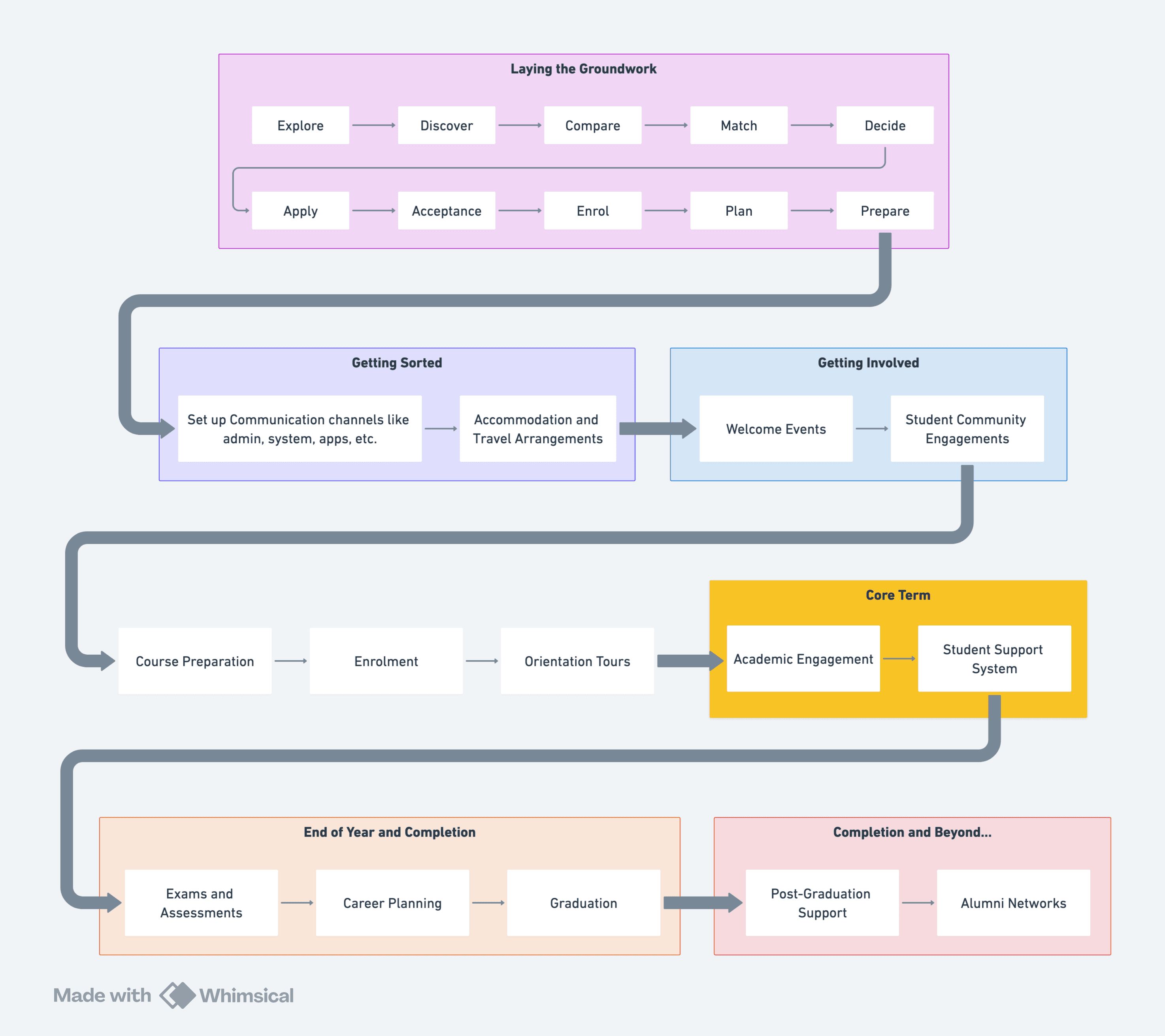
The student journey map, synthesising multiple sources, outlines key stages—Laying the Groundwork, Getting Sorted, Getting Involved, Commencement, Core Term, End of Year, and Beyond—with a focus on inclusivity for diverse students, including international, disabled, LGBTQ+, and underrepresented groups. It highlights practical measures like accessible communication, hybrid events, culturally sensitive support, Universal Design for Learning, inclusive assessments, and supportive alumni networks.
Below is a student journey map for the 'Getting Sorted' stage in a more conventional format, combining an empathy map with Plutchik’s Wheel of Emotions. This integration highlights the emotional landscape and key touchpoints, providing a deeper understanding of the student experience at that stage.
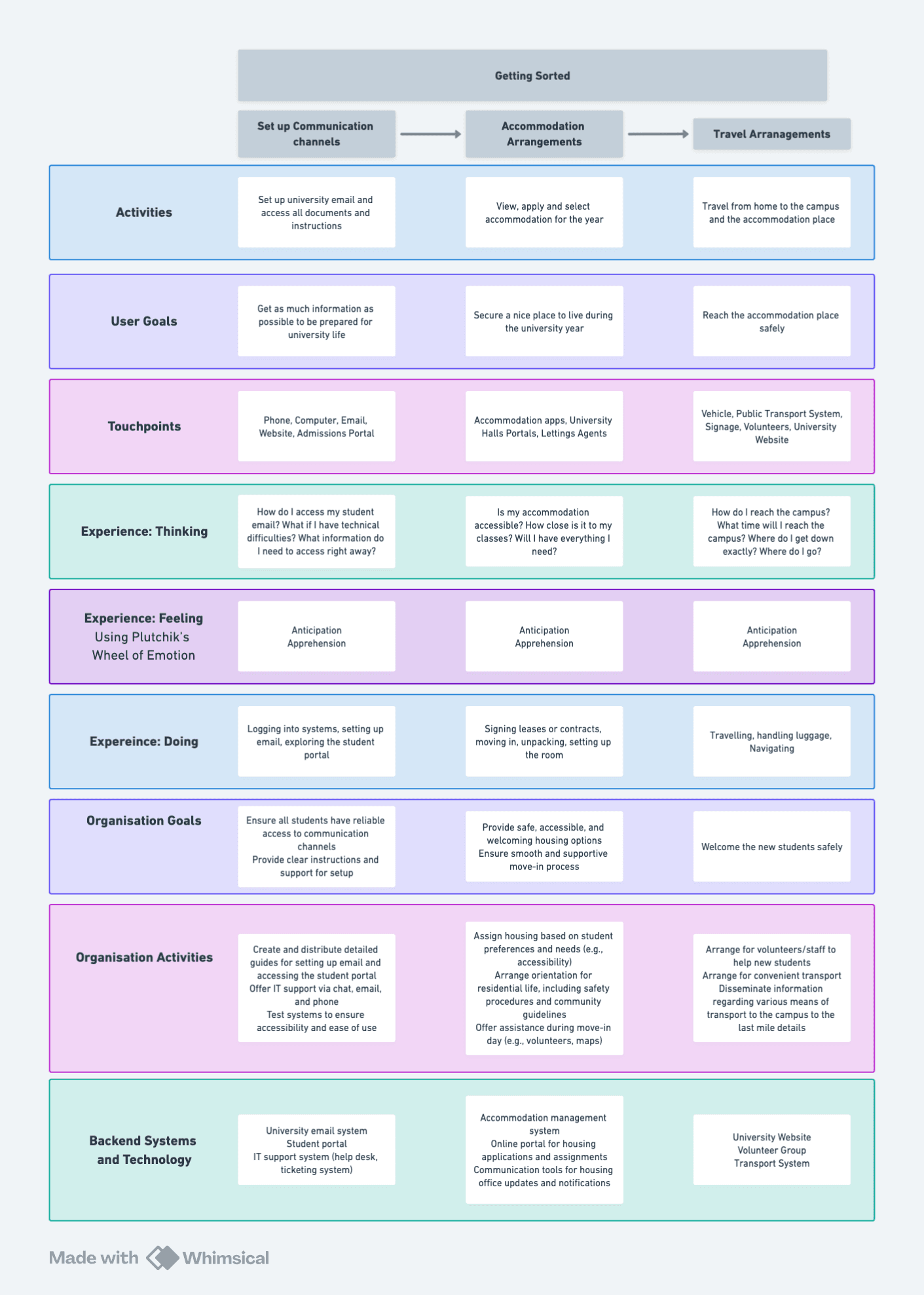
The approach can be refined by developing personas for diverse, overlapping student groups (e.g., international disabled students, ethnic minorities in need of financial support). Each journey stage can then incorporate innovative solutions co-designed by a diverse team of designers, policymakers, and stakeholders, as shown in the example below.

Key Recommendations
Adopt a holistic approach addressing disability, gender, race, and socio-economic status.
Prioritise accessible communication (e.g., braille, large print, screen-reader-compatible materials).
Enhance support systems for diverse students, including mental health and identity-specific needs.
Foster inclusive engagement through accessible events, mentorship, and student societies.
Focus on cultural sensitivity and behavioural change via training and respectful policies.
Ensure accountability and continuous improvement through monitoring and feedback.
Incorporate feedback and empathy using tools like empathy maps and emotion wheels.
Promote strategic leadership with clear EDI strategies and defined roles.
Facilitate inclusive post-graduation support through ongoing resources and alumni networks.
By addressing these limitations and implementing these recommendations, future research and practice can further advance the goal of creating truly inclusive higher education environments, benefiting students, faculty, and the broader academic community.
You can find the detailed project report here